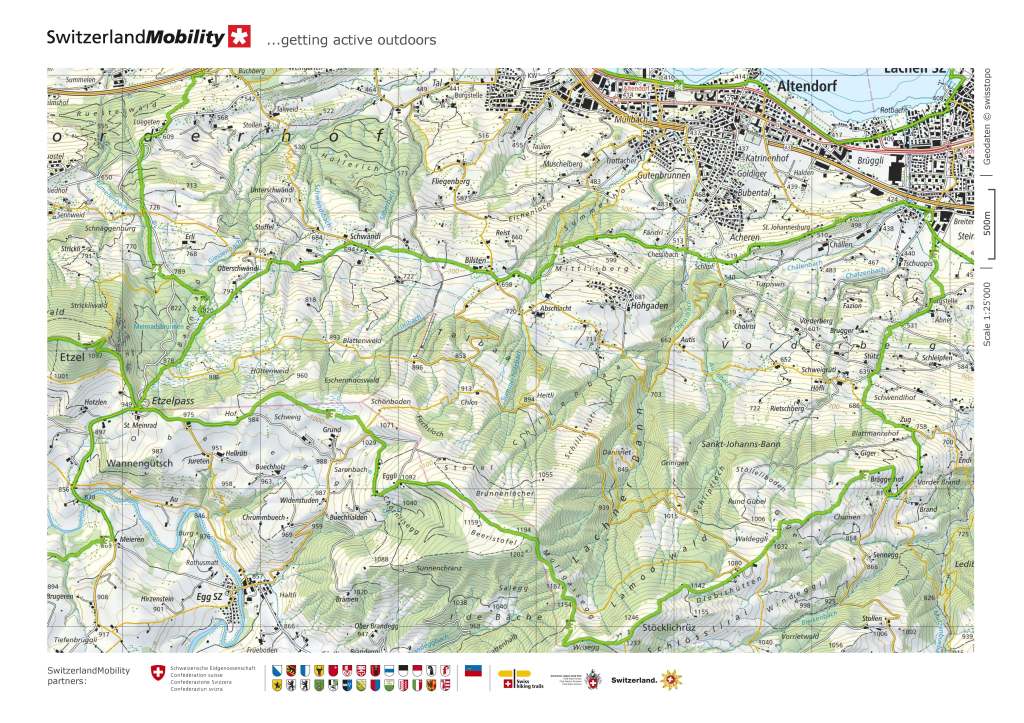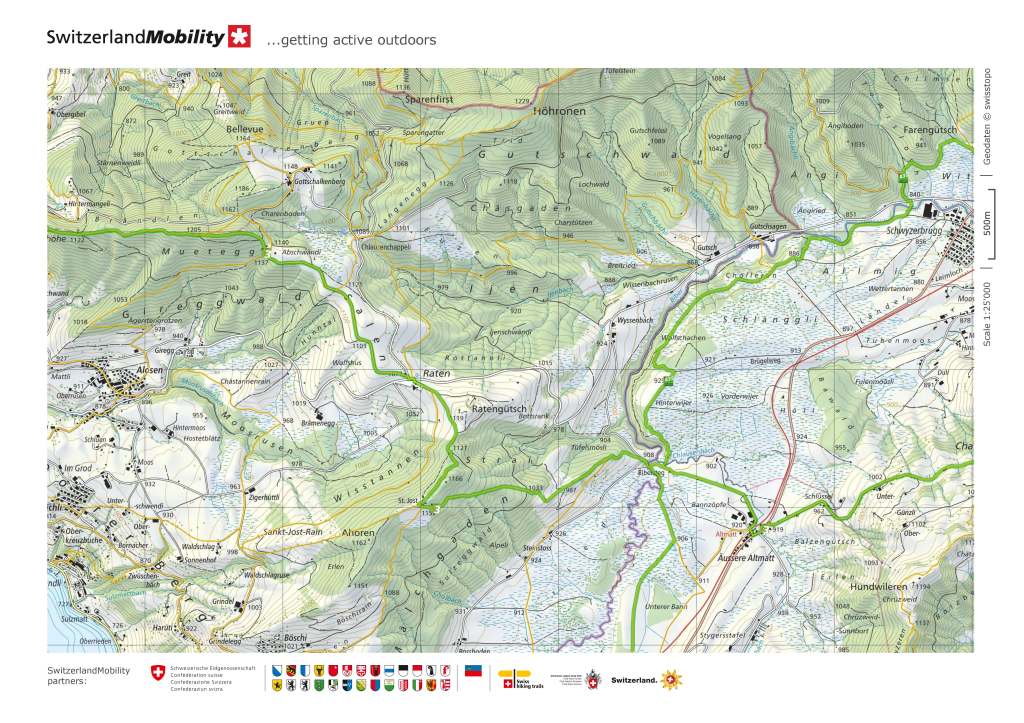

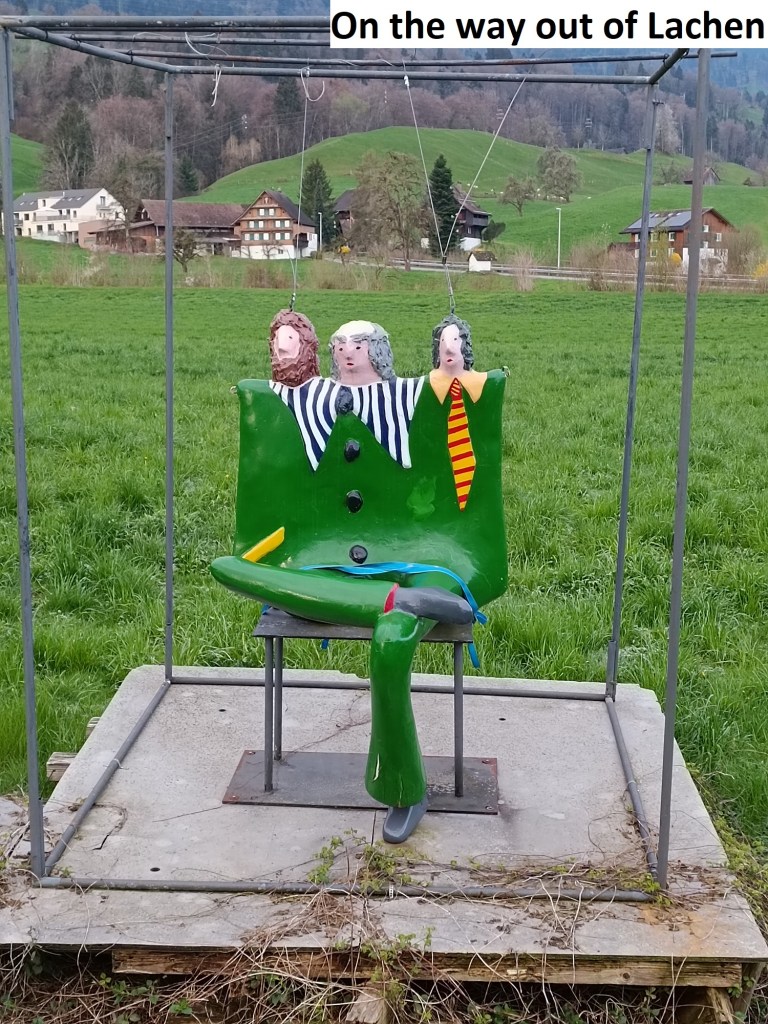
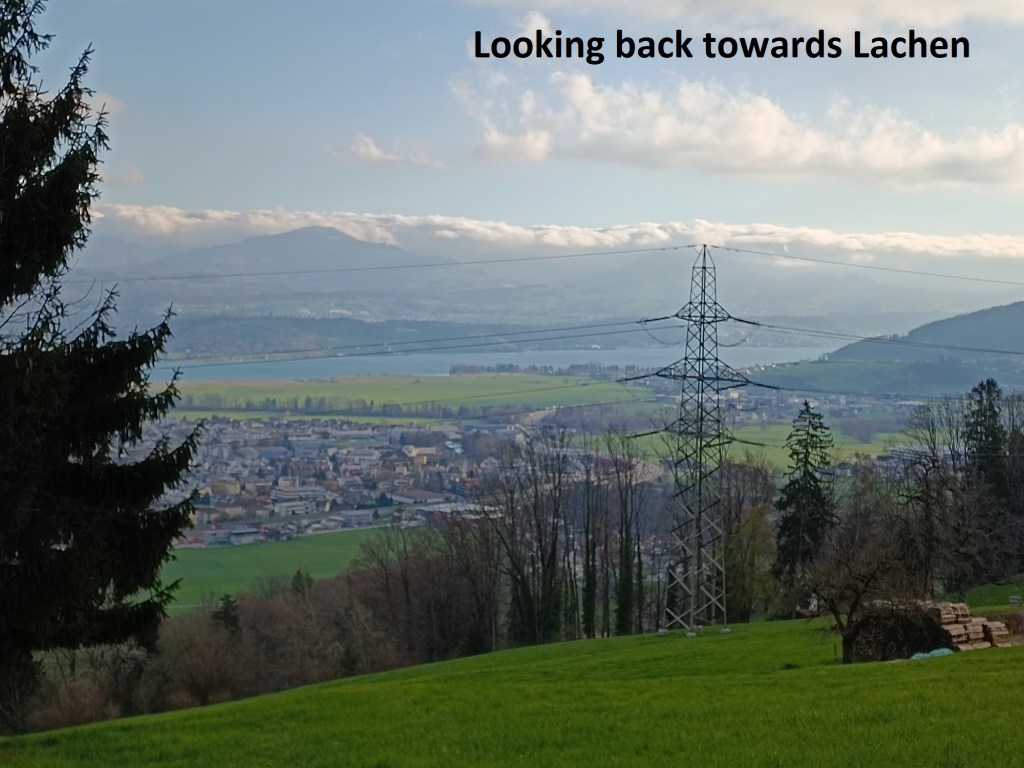
After the flatness of the route from Weesen to Lachen, I was glad to be getting back onto more mountainous ground for the next stage. It was a cold but sunny morning in April when I got off the train in Lachen and headed on my way. I passed the three wise men on my way out of town, or is it one man? Who knows what the artist had in mind. Almost immediately after that, the trail leaves the road and starts uphill. I went through fields at first, until looking back before entering a wood, I had a fine view back towards Lachen.
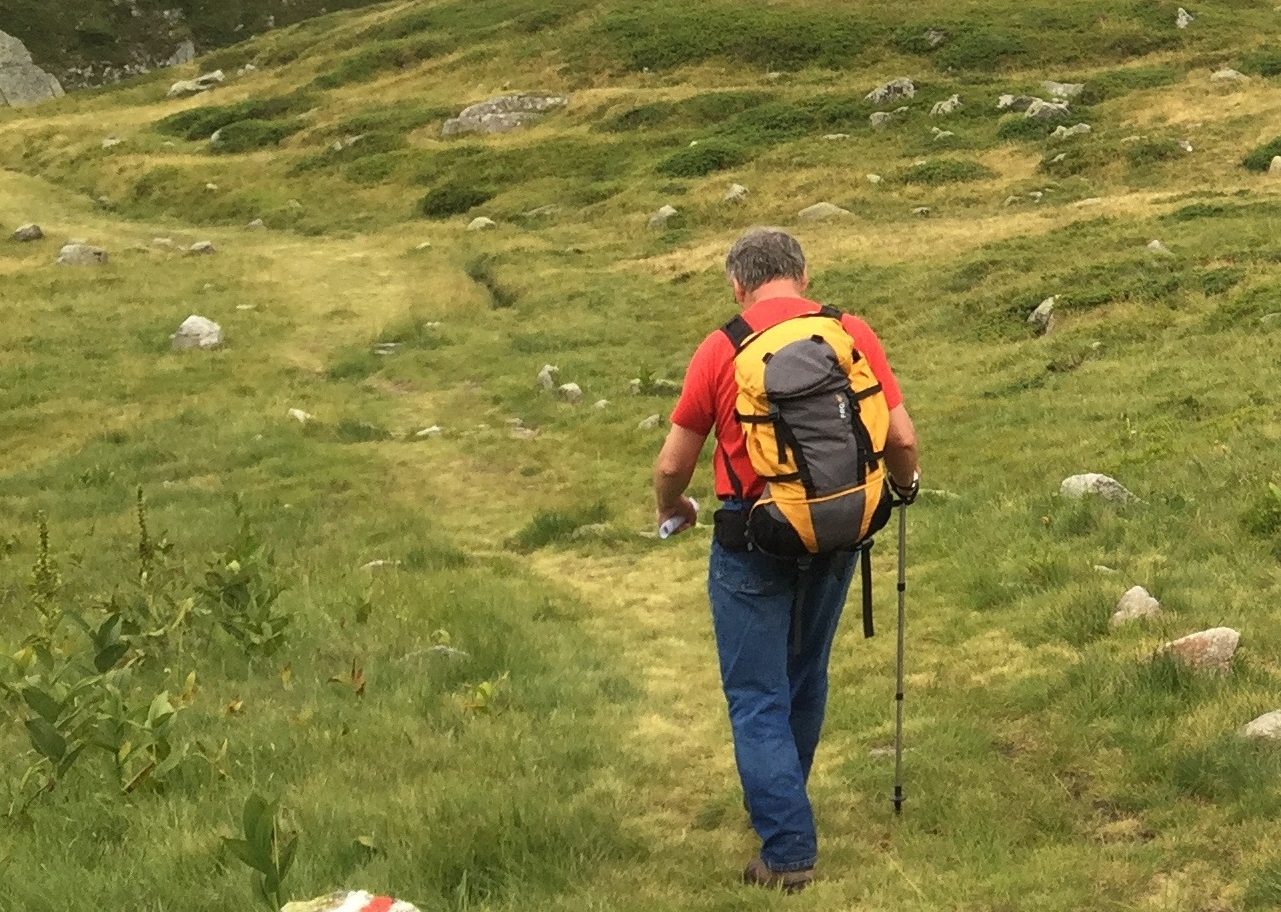
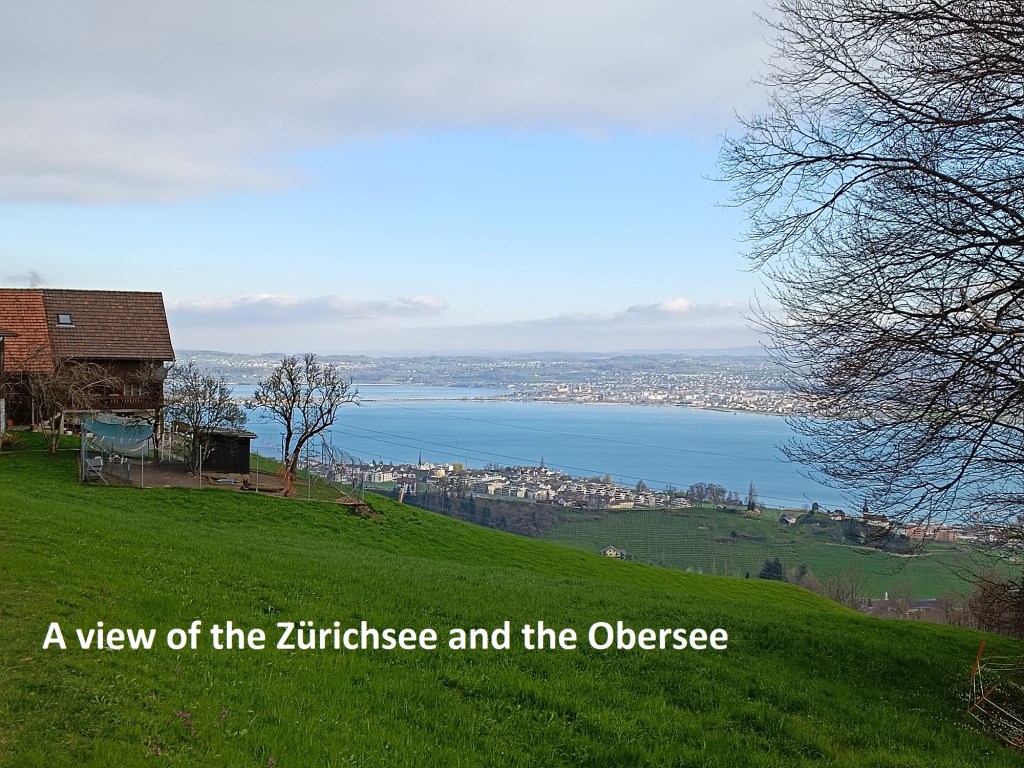
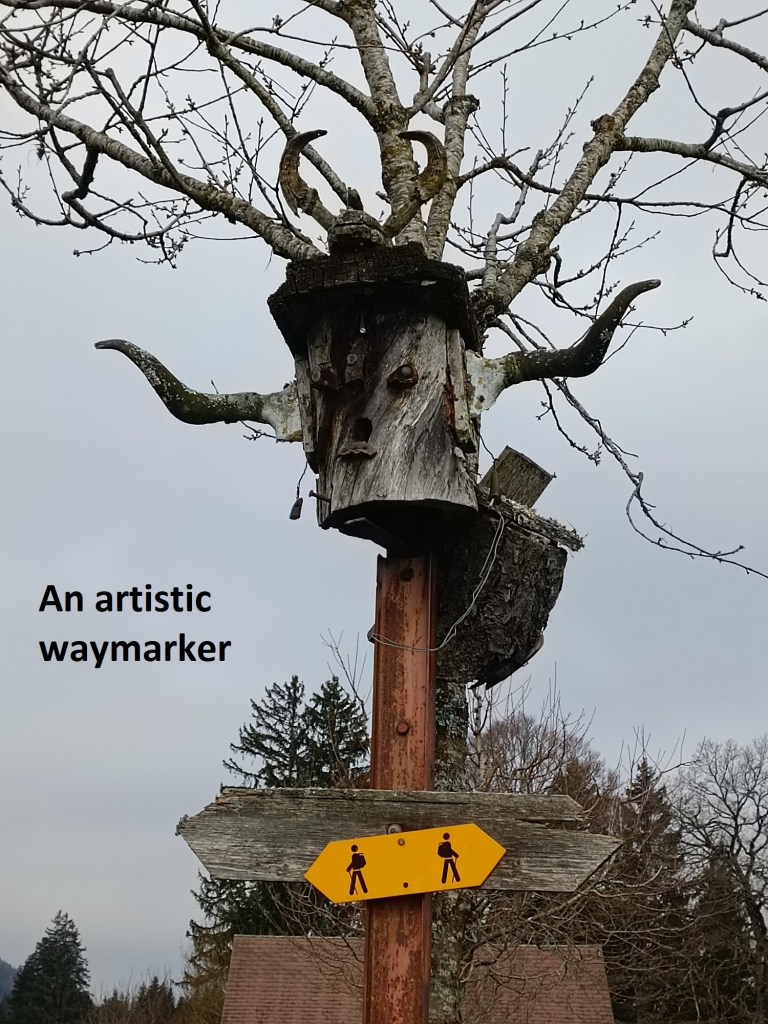
After coming out of the wood, the trail levelled off a little approaching Bräggerhof. Then it resumed its upward trajectory. The trail went on higher and higher, and as it did the views back towards the lakes became even better. By now, the sun was full up, the morning was bright, and the Zürichsee and Obersee were spread out in the sunshine below me. I passed a waymarker turned into a primitive, almost shamanistic artwork. It was an interesting creation.
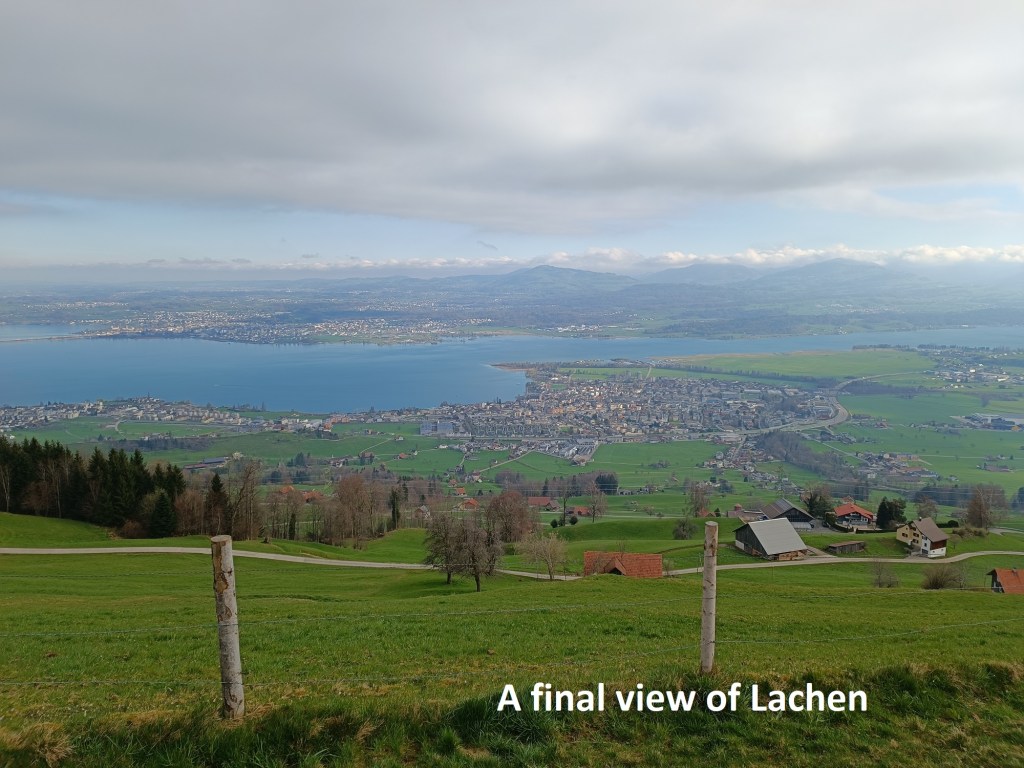
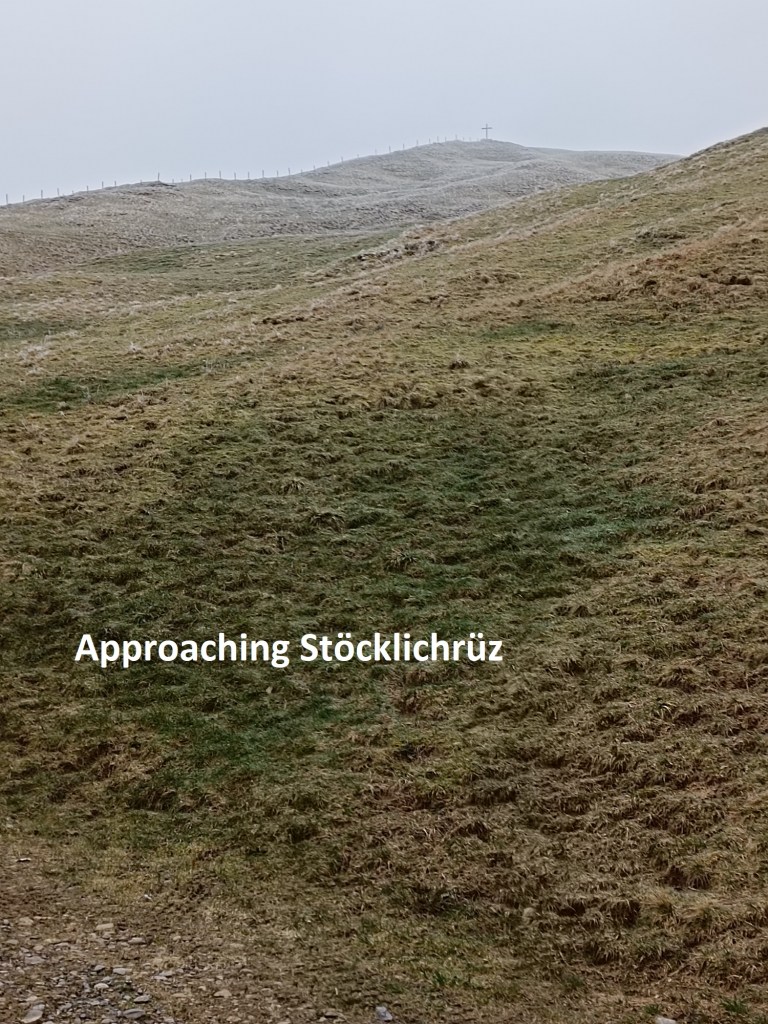
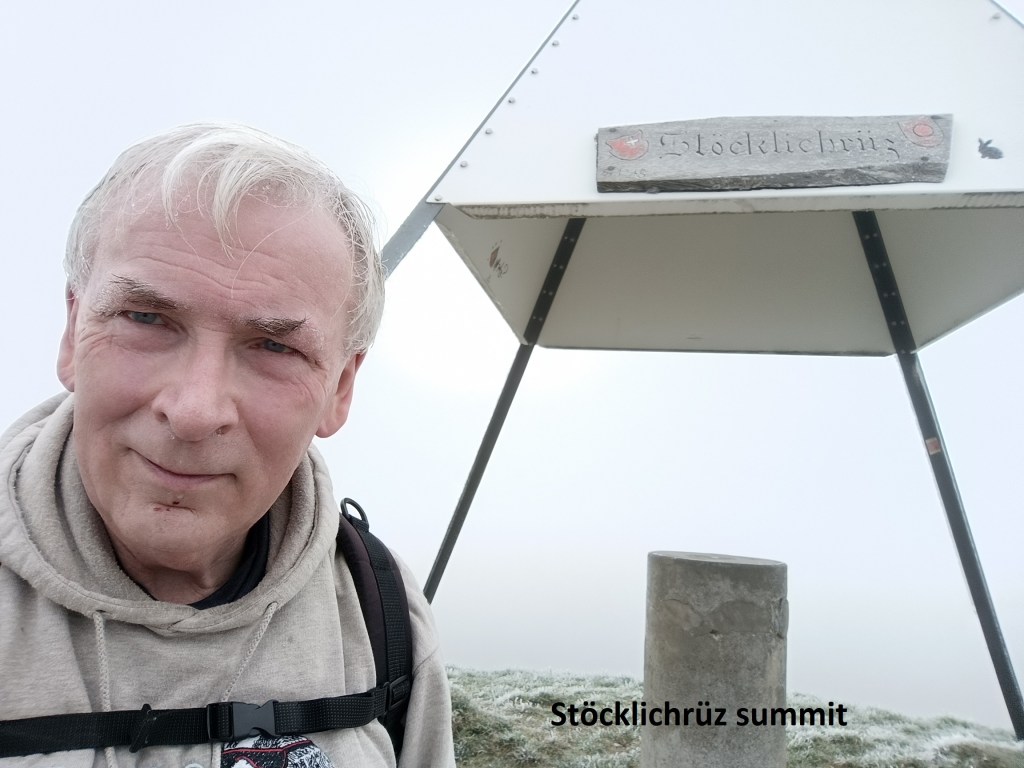
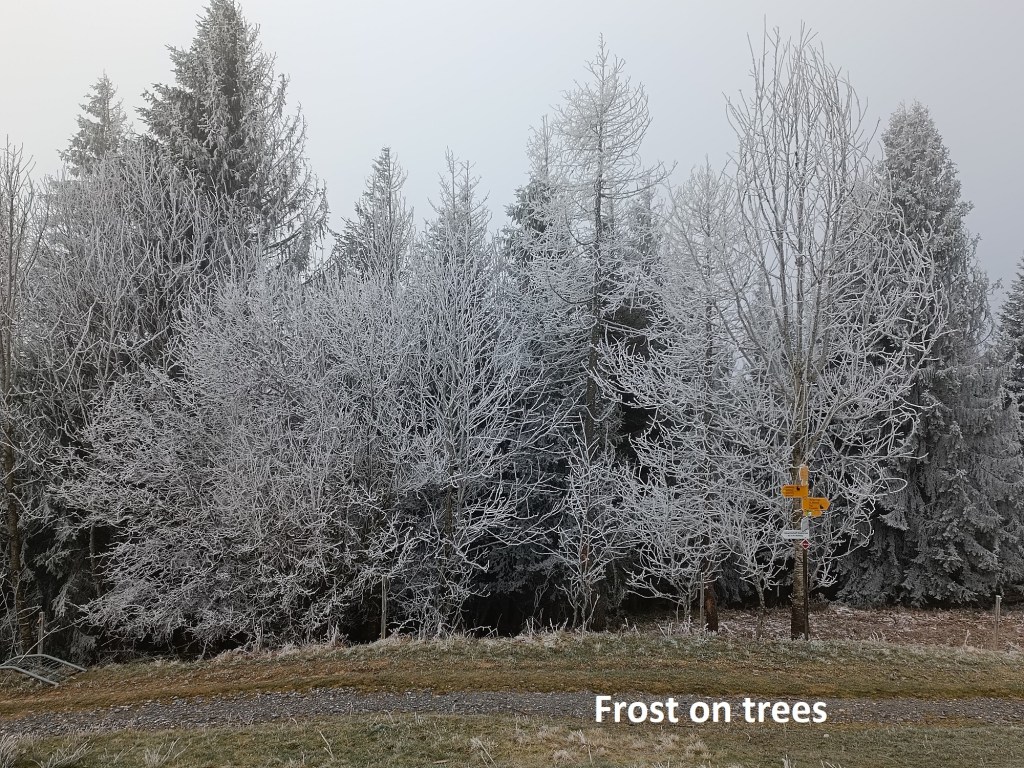
As I went higher, however, the weather became colder. There was still a mist on the upper slopes, and approaching Stöcklichrüz, the frost was clear on iron-hard ground. I passed another walker on the final stages of Stöcklichrüz. At the summit, he went on, while I paused to get some photos. The other walked went a different route, taking the left hand fork just below the summit, while I continued on my trail. As I did, it was still cold, with the trees so covered in frost, that at times they seemed bleached.

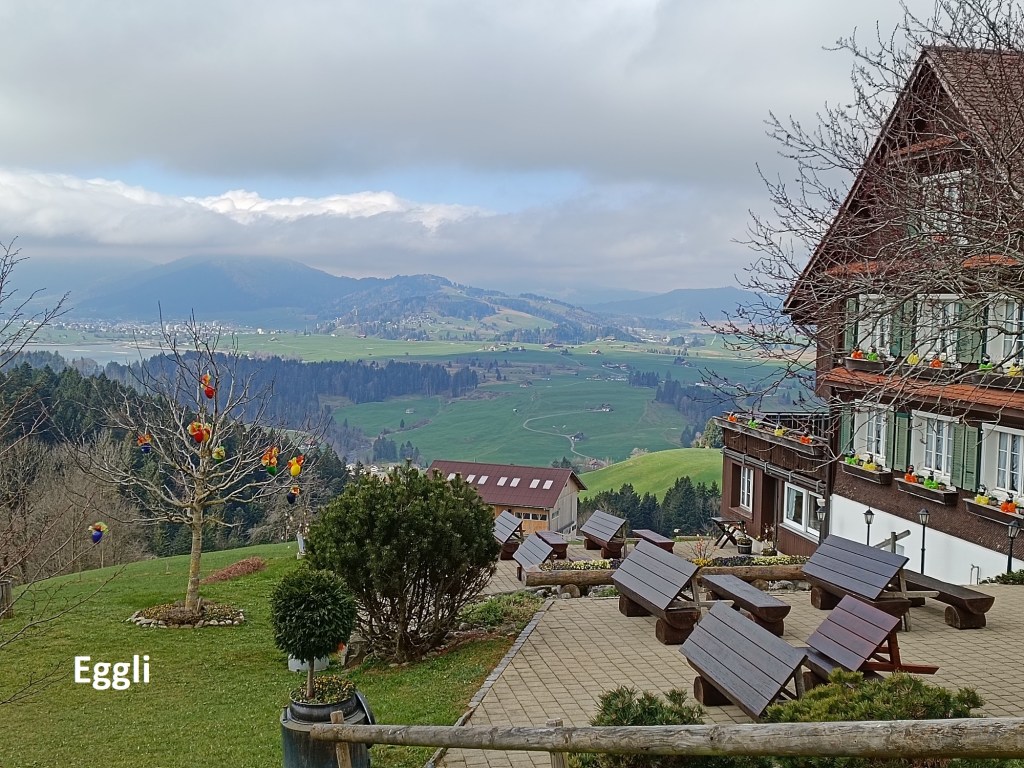
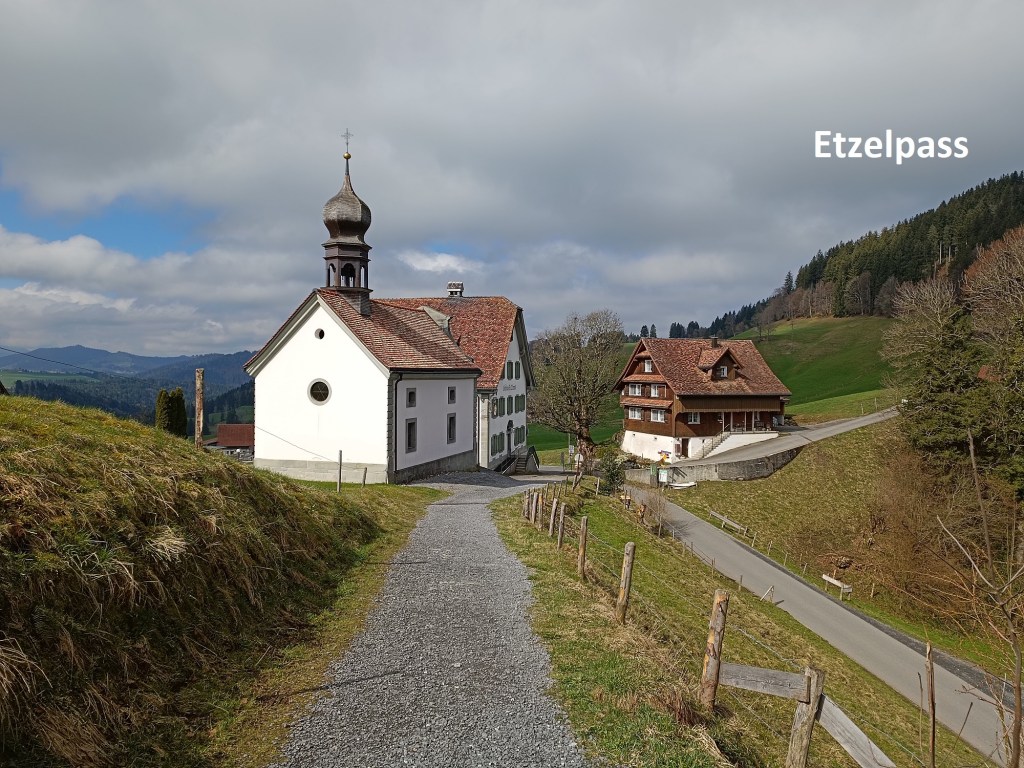
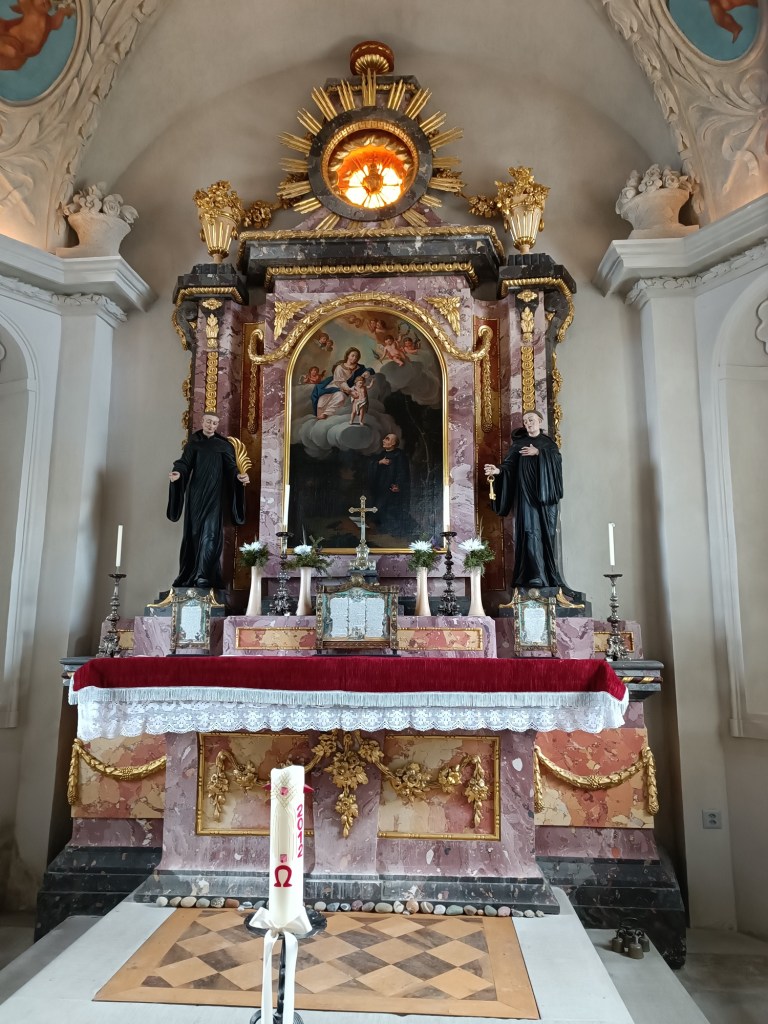
Descending further, I came back into sunshine again, and by the time I reached the farmhouse at Eggli, I could see as far as Einsiedeln. But the trail does not go straight there. Instead, it heads slightly northwest to reach the Etzelpass. This was an important point on the old pilgrimage route from Zürich towards Einsiedeln. There was a church there as far back as the thirteenth century, but the current building dates from 1698. It has undergone several restorations, most recently in 1960. The Pilgrims’ House beside the church is a later building, but not by much; it dates from1759. It has also been extensively restored, most recently in 1983.
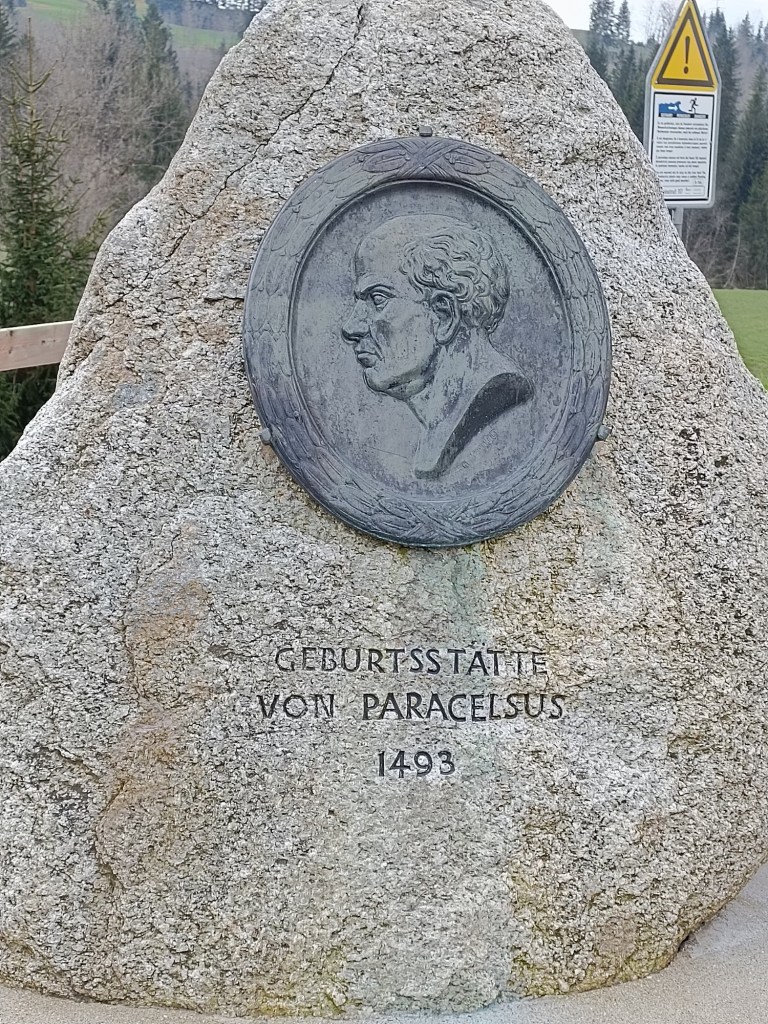
The trail descends from the Etzelpass towards the Sihl river on the way towards Einsiedeln. Just where the route crosses the Sihl, there is a monument to Paracelsus, who was born in the house beside the bridge. His exact date of birth is uncertain, but is reckoned as about 1493, around the time of major geographical discoveries and advancement of knowledge. Paracelsus’ father was a physician, and his mother had worked in the hospital at the nearby Einsiedeln monastery. As a young man, he must have seen more than his share of medical cases, and his initial medical education came from his parents. In his twenties, Paracelsus travelled around Europe, working as an army surgeon in some of the many wars of the time. He returned after three years, but was unable to set up a practice at home, so he settled in Salzburg, before moving to Basel, where he became a lecturer at the university. He was openly dismissive and abusive towards more established physicians, especially those who had attained positions of importance through titles. In the first half of the sixteenth century, it was a time of questioning old beliefs, and Paracelsus was part of that trend. However, he antagonised so many people, that he was forced to leave Basel. After working as an itinerant physician in Alsace, Bavaria, and Austria, he died in 1541. He left several books explaining his philosophy and science. Paracelsus was part of the movement away from seeing illness as a sign of the wrath of God, to a more scientific approach. His books remained a major influence on medical practice in the 16th and 17th centuries.
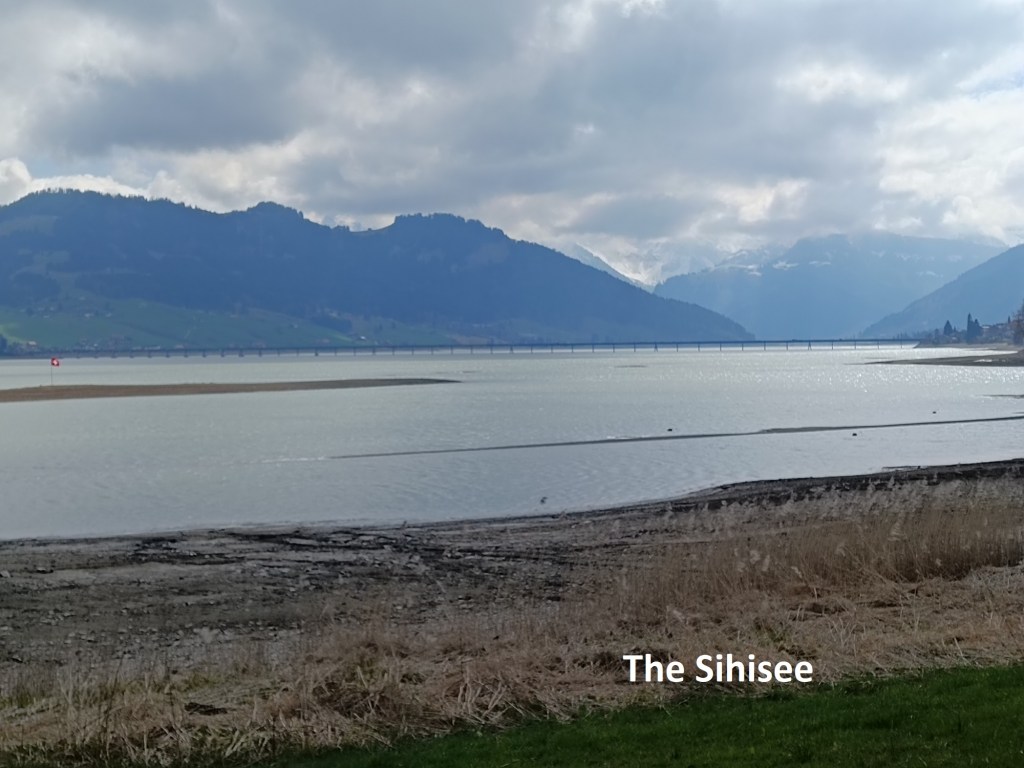
After crossing the Sihl, I lost the official trail. By the time I realised this and consulted with my maps, it was shorter to take an unofficial route into Einsiedeln. So I continued on to the shore of the Sihisee and followed the shoreline towards Einsiedeln.
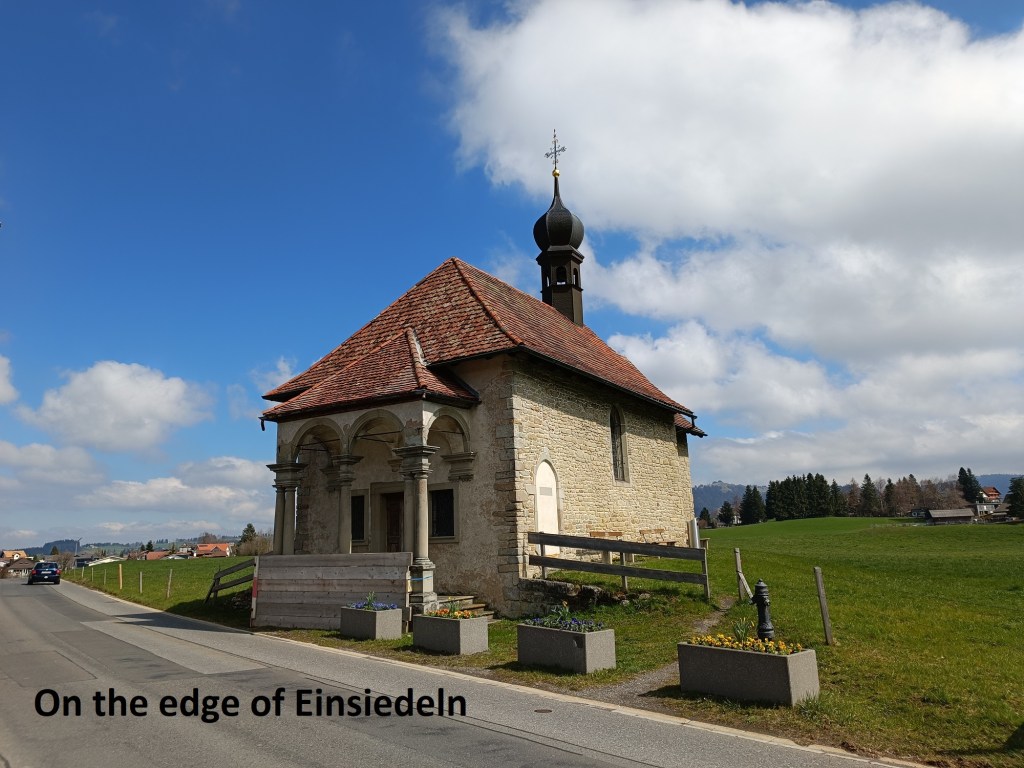
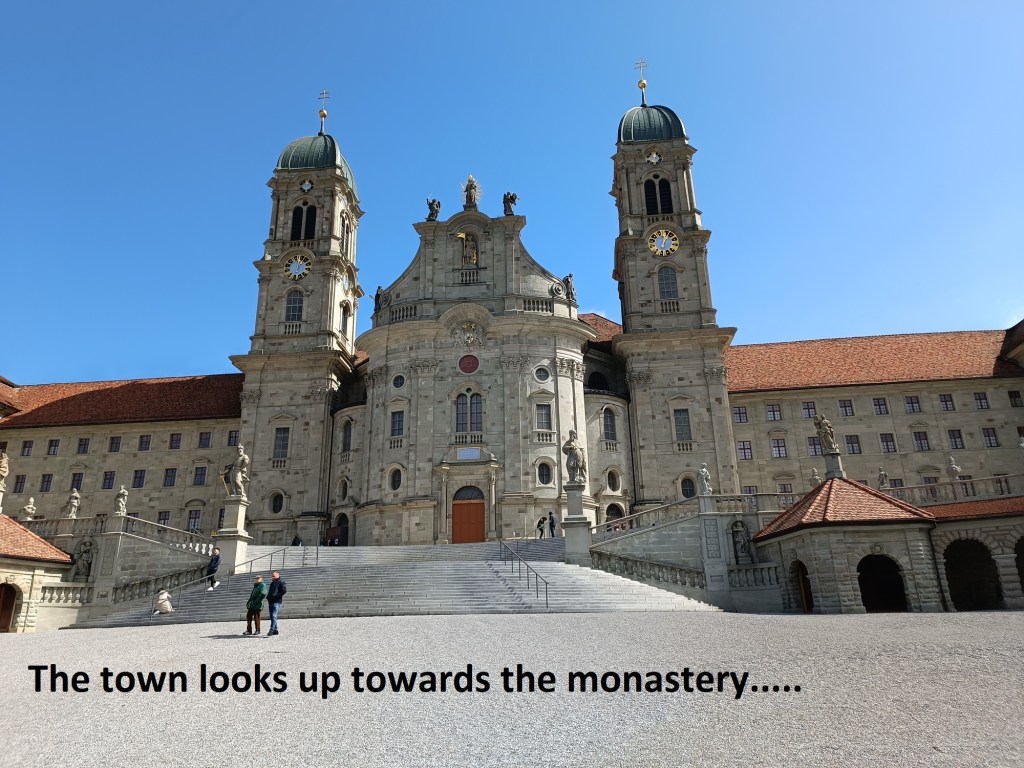
Einsiedeln is the site of a large Benedictine monastery. Its origins go back to the late eighth century, but its rise to prominence really only began in the early tenth century. By the thirteenth century, the abbey had become so powerful that it exercised political as well as religious rule over the area. The abbey was largely unaffected by the religious reformations that caused so much upheaval in Europe, though its political independence vanished in the late 18th century with the arrival of French armies. In the 19th century, fearing for the future of Einsiedeln, the monks set up a satellite foundation in the US, though their fears were not realised. The abbey remains an important place of pilgrimage within Switzerland even in the 21st century, as well as being a major point on the way to Santiago de Campostella. The abbey dominates the townscape of Einsiedeln.
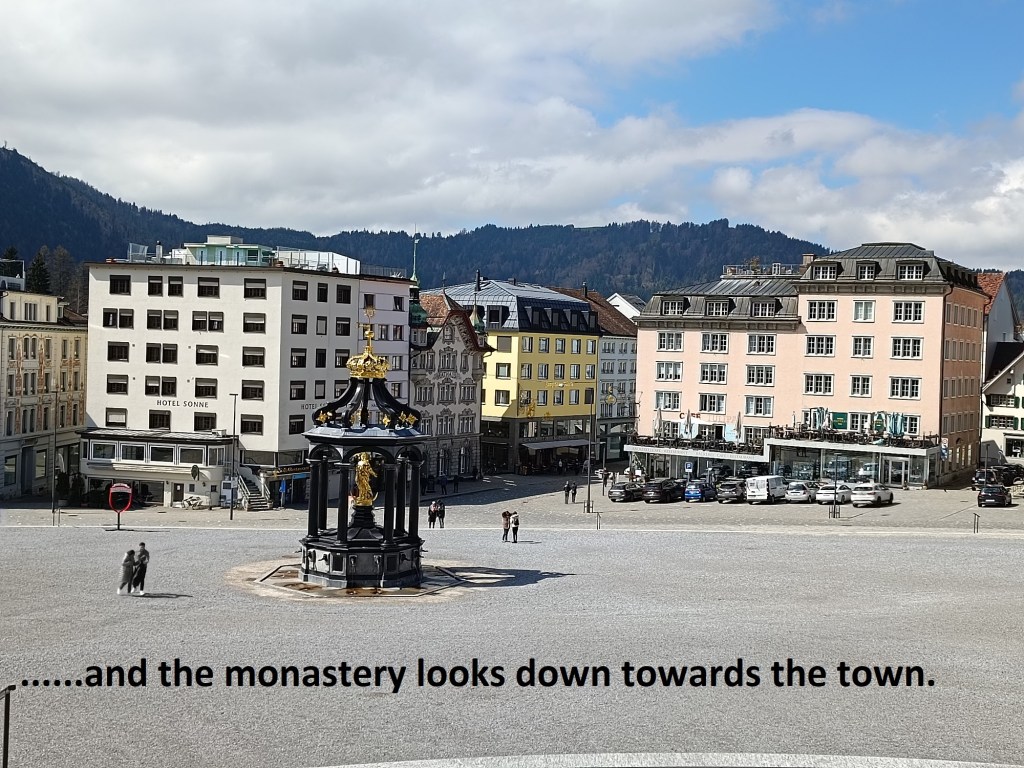
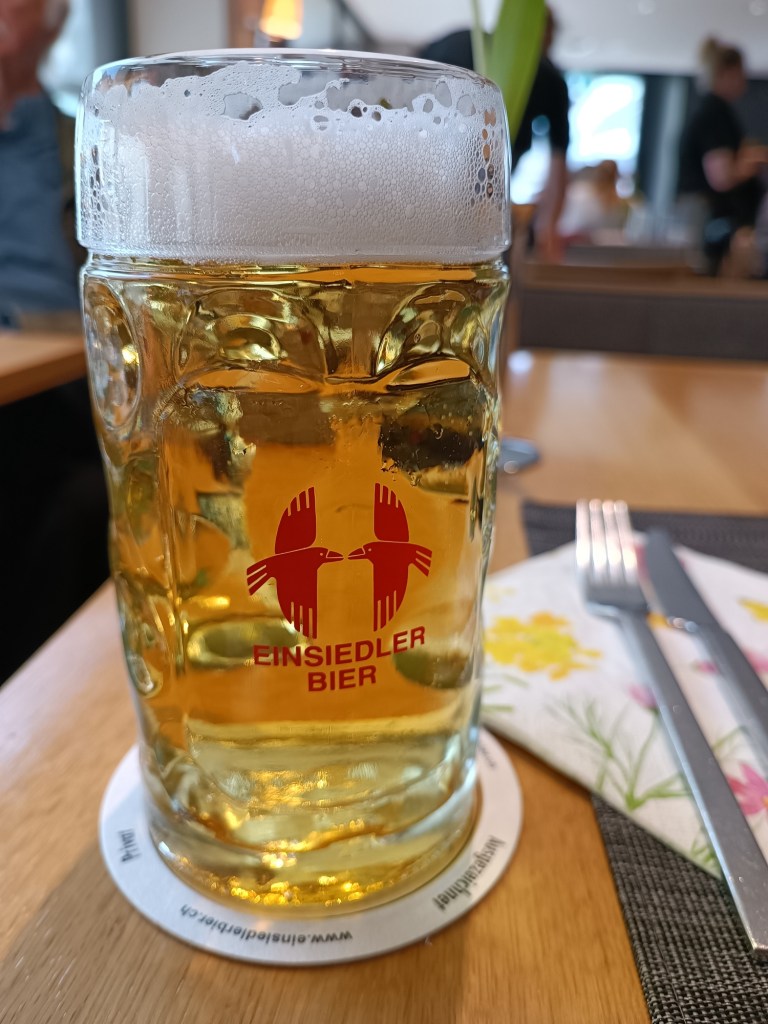
While in Einsiedeln, I stopped for lunch. Einsiedeln has its own brewery, a family owned business operating since 1872. With a pedigree like that, I just had to wash down my lunch with that local brew, and I was not disappointed.
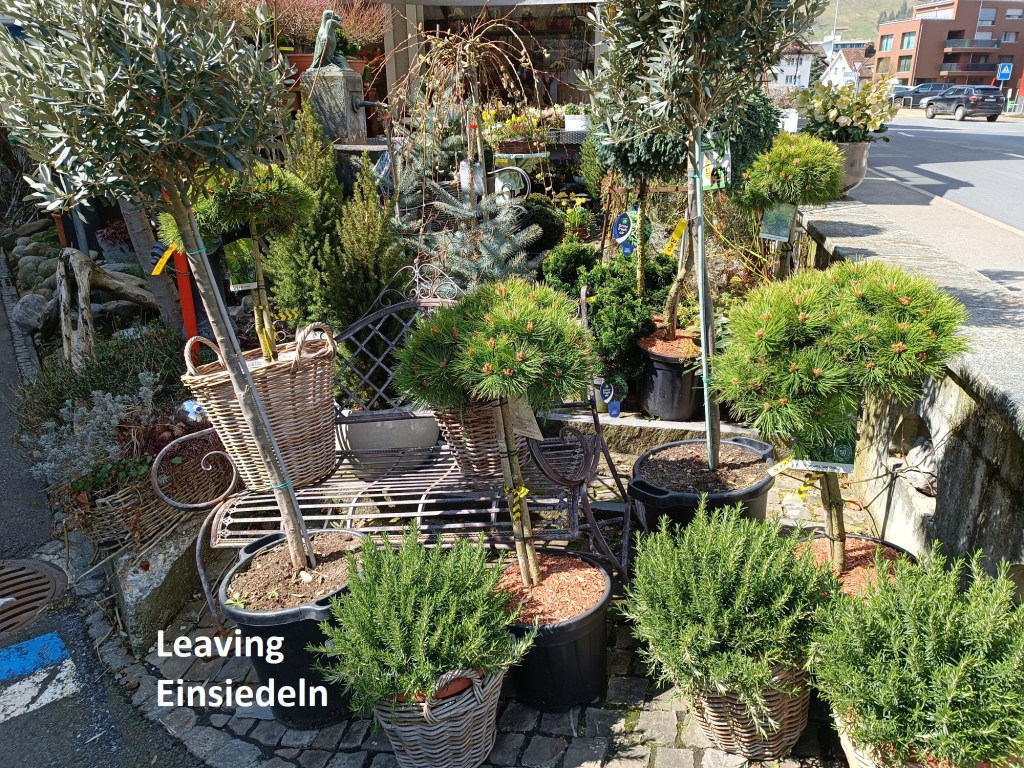
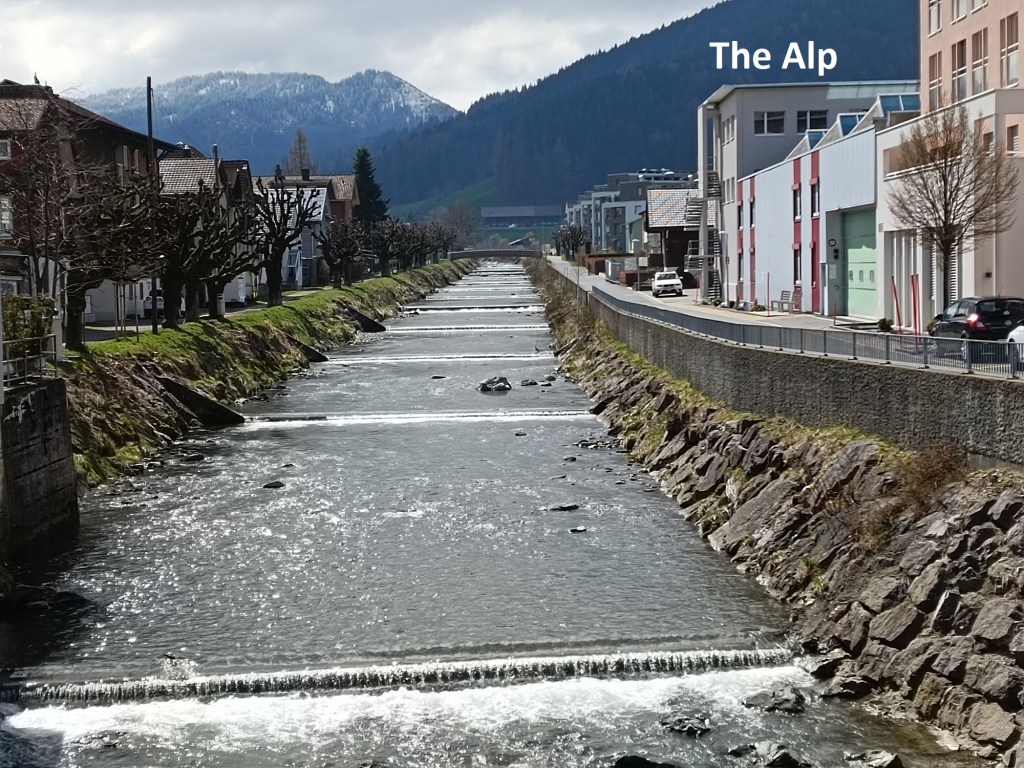
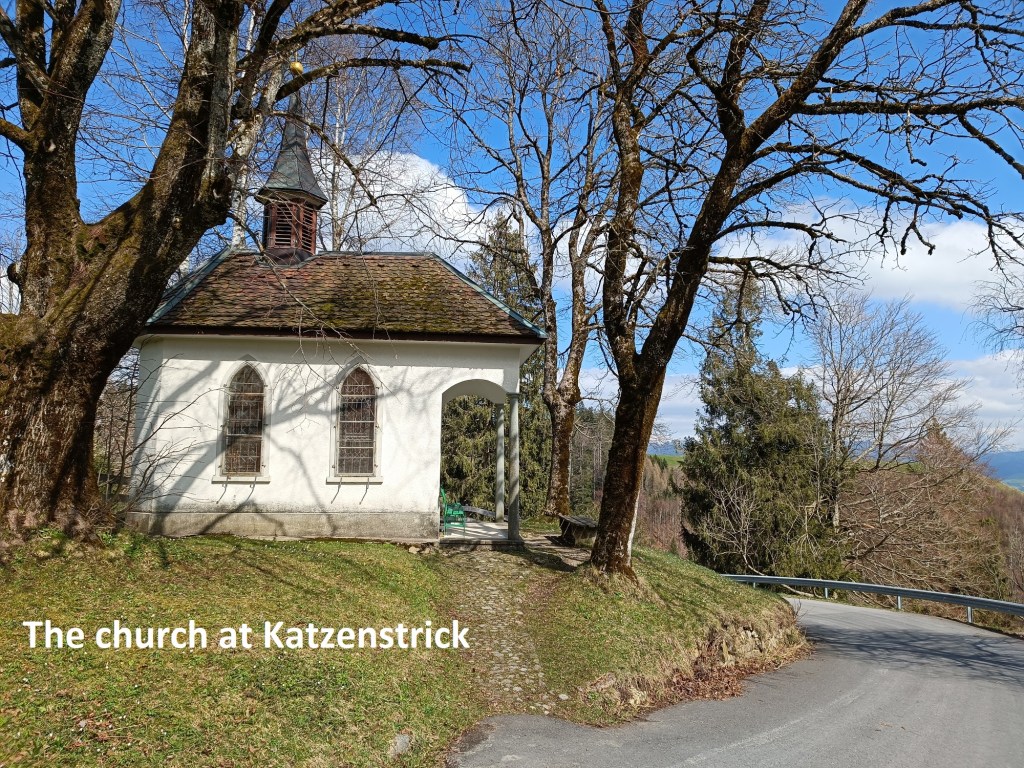
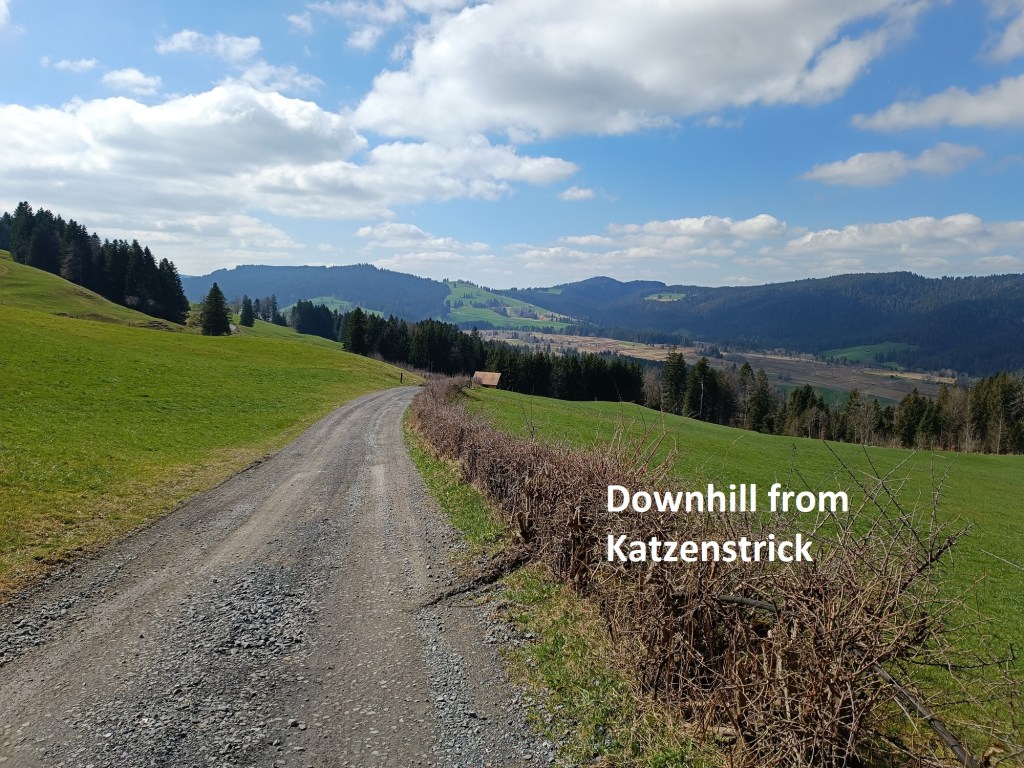
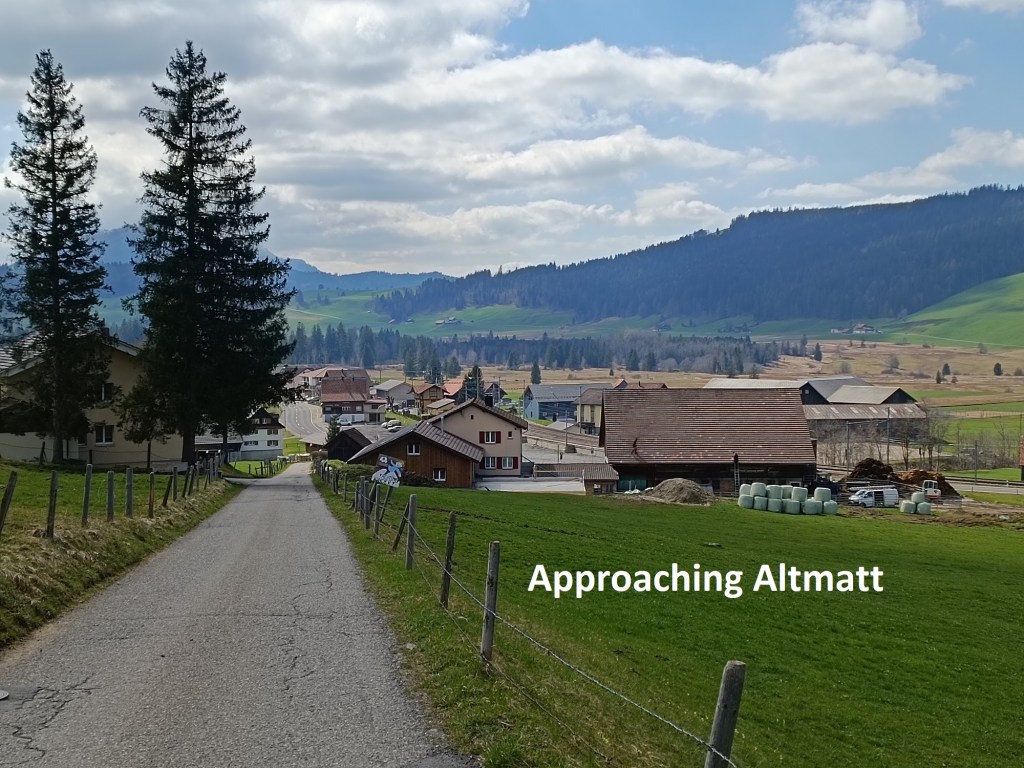
But Einsiedeln was not the end of my journey for the day. I had farther to go. I went on out of town towards the west, passing a florist shop with a good display, and crossing over the river Alp. For a time, the route was relatively flat, but later it began to rise steeply, eventually reaching a crest at Katzenstrick, where there is a small church. Alas it was closed. From there, the route goes downhill, gradually making its way to Altmatt, which was my final destination for the day. After that, it was a combination of bus and train to make my way back home.
My total step count for the day was 42, 171.